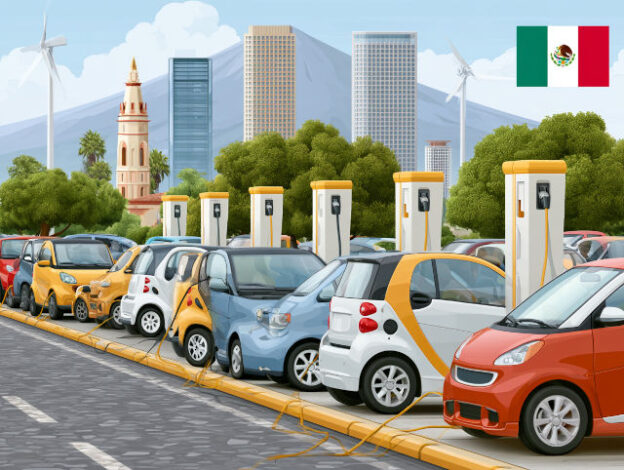
The transition to electric vehicles (EVs) in Brazil and Mexico has been shaped as much by domestic politics and global economic pressures as by environmental concerns, according to a new study by Renato H. de Gaspi of Johns Hopkins University and Pedro Perfeito da Silva of the University of Exeter. The researchers argue that decisions in both countries have been influenced by factors extending beyond emissions reduction, costs, and technological efficiency.
Although Brazil and Mexico face similar global pressures and structural constraints, they have followed markedly different paths toward transportation decarbonization. The study finds that national political coalitions, industrial structures, and relationships with foreign investors have played a central role in determining each country’s technological strategy.
In Brazil, EV development has been supported by a large domestic market, a strong bioethanol industry, and political alliances linking rural and urban interests. Growth in commodity exports has strengthened the position of domestically owned sectors, while robust consumer demand has attracted foreign investment and provided manufacturers with a substantial internal market.
These conditions have given the Brazilian government greater bargaining power with multinational automakers, which dominate vehicle production throughout the region. As a result, Brazil has favoured decarbonization strategies that align with domestic priorities, particularly hybrid vehicles compatible with the country’s extensive ethanol infrastructure and existing flex-fuel fleet.
Mexico’s experience has been different. Its automotive industry is heavily export-oriented, with about 87 per cent of light vehicle production destined for foreign markets. This dependence on external markets and foreign technology has limited policymakers’ ability to shape industrial development and has tied the country’s EV strategy closely to integration with North American supply chains.
According to Dr Perfeito da Silva, Mexico has rapidly expanded battery electric vehicle assembly and battery production while seeking to increase local content and reduce technological dependence. However, these efforts remain constrained by the country’s export-led development model and its reliance on access to US and Canadian markets.
The study notes that rising protectionist pressures, including tariff threats and uncertainty surrounding key provisions of the US Inflation Reduction Act, have exposed vulnerabilities in Mexico’s approach. While Brazil has pursued a domestically adapted hybrid-ethanol pathway, Mexico faces growing pressure to take a more active role in industrial policymaking as the external environment becomes less stable and predictable.
More information: Renato H. de Gaspi et al, The Politics of Technological Choice in the EV Transition: Comparing Brazil and Mexico, Politics and Governance. DOI: 10.17645/pag.11240
Journal information: Politics and Governance Provided by University of Exeter