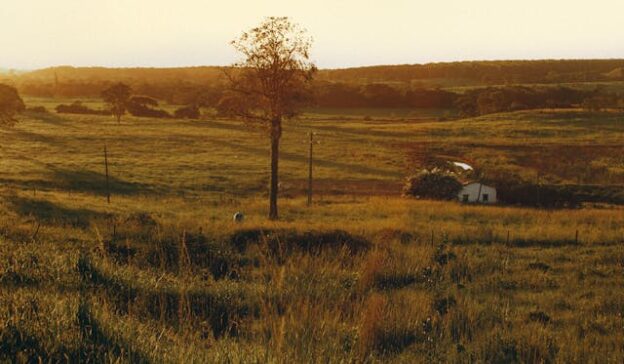
Small-scale farmers in Brazil are confronting the unrelenting advance of climate change with admirable tenacity. Though, as a new study in the Strategic Management Journal reveals, their well-intentioned efforts may be sowing the seeds of more profound vulnerability. In what could be described as the agricultural equivalent of trying to patch a leaky roof during a hurricane, these farmers are taking urgent, improvised measures that help them weather immediate storms but could, in the long run, undermine their capacity to adapt.
The research, led by Dr Lucrezia Nava, Assistant Professor of Sustainable Business Management at the University of Exeter Business School, and co-authored by Dr Jorge Chiapetti and Dr Rui Barbosa da Rocha of Universidade Estadual de Santa Cruz, together with Dr Maja Tampe of Universitat Ramon Llull, examines the predicament of smallholder cocoa producers in Southern Bahia. This picturesque yet beleaguered region, once synonymous with lush greenery and rich cocoa harvests, is now a crucible of climate stress — buffeted by prolonged droughts and economic volatility that together form a potent recipe for hardship.
Dr Nava points out that while large and medium-sized organisations in affluent nations often continue “business as usual,” buoyed by deep pockets and stable conditions, smaller enterprises in lower-income contexts face far more perilous realities. “These farmers are on the front lines of climate change,” she explains, “armed not with corporate safety nets but with resilience and hope — two assets that, regrettably, do not always stretch far enough.” She describes the grim arithmetic of survival: every decision is a balancing act between today’s hunger and tomorrow’s sustainability. It is rather like deciding whether to eat one’s seed corn — satisfying in the moment, but ruinous when planting season arrives.
To fully understand the scope of this dilemma, the researchers conducted four rounds of surveys with 3,091 cocoa farmers between 2015 and 2019, complemented by extensive interviews with 38 farmers and six cocoa experts. The data paint a complex and unsettling picture. Farmers directly impacted by drought were found to lose forest cover 3 per cent faster each year than those who were spared such conditions, suggesting that the pressure of immediate need often outweighs the logic of long-term conservation. More alarmingly, repeated exposure to extreme weather was linked to the adoption of maladaptive strategies — particularly deforestation for livestock grazing. It is an act that provides quick cash and meat on the table, but at the expense of soil quality, biodiversity, and ultimately, the very ecosystem that sustains their livelihoods.
Beyond economics, the study highlights a psychological twist worthy of Greek tragedy: when adversity feels insurmountable, people stop believing in solutions. The researchers describe how farmers caught in what they call “climate traps” become increasingly fatalistic, perceiving their situation as hopeless. This resignation leads to diminished investment in adaptive practices, creating a self-perpetuating cycle of environmental decline and economic desperation. As Dr Chiapetti grimly notes, “These traps worsen both environmental and economic conditions, leaving farmers with fewer options to break free.” It is, in effect, a climate quicksand — the harder one struggles, the deeper one sinks.
Dr da Rocha adds a dose of realism tinged with irony: “Many producers fear that climate change will only intensify, so they choose immediate relief — even when it undermines long-term resilience.” It is a kind of pragmatic pessimism: if one suspects the sky will fall tomorrow, why bother building a barn today? Yet this logic, while understandable, underscores the need for policies that make sustainability possible, not merely desirable. Farmers are rational actors in an irrational climate, making choices that appear perfectly logical in the short term, even if they are collectively disastrous over time.
The study’s implications extend well beyond Bahia’s cocoa fields. The authors argue that these local struggles mirror a broader global predicament — the fragile interdependence between vulnerable producers and the international supply chains that rely on them. Cocoa, after all, does not materialise magically in our chocolate bars; it is coaxed from the earth by individuals whose decisions are shaped by immediate necessity. For policymakers and corporations, the message is clear: support cannot stop at technical training or financial aid. Accurate adaptation requires addressing the psychological and social dimensions of decision-making under stress. As Dr Tampe eloquently concludes, “By understanding how vulnerable producers make decisions under climate strain, we can design support systems that build real resilience — not just patchwork survival.”
Ultimately, the study offers both a warning and a glimmer of hope. The warning is that without coordinated, empathetic intervention, the current trajectory risks eroding the ecological foundations of agricultural livelihoods across the Global South. The hope — and it is a stubborn, green shoot of hope — lies in the possibility of reimagining adaptation as a partnership between science, policy, and the human spirit. Farmers, after all, have weathered storms before; the challenge now is ensuring that their fight for survival does not become the cause of their undoing. If nothing else, perhaps this study will persuade us that sustainability, like good cocoa, requires patience, care, and a refusal to settle for the quick fix — however tempting it may be when the droughts roll in.
More information: Lucrezia Nava et al, Die now of hunger or later of thirst: Understanding climate change adaptation decisions in vulnerable contexts, Strategic Management Journal. DOI: 10.1002/smj.3709
Journal information: Strategic Management Journal Provided by Strategic Management Society