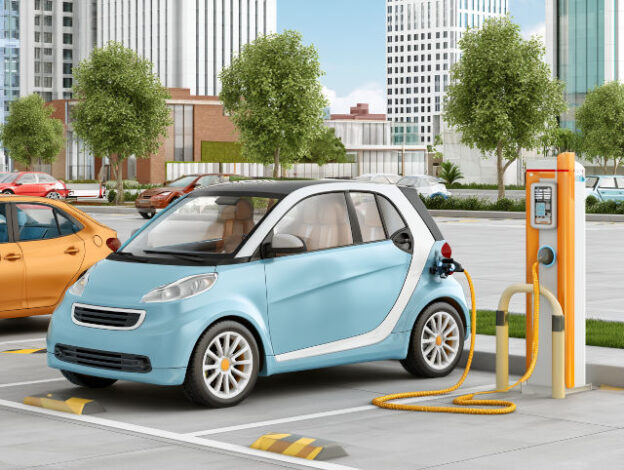
Despite regional differences in climate, electricity generation, traffic congestion, and driving habits, electric vehicles generally produce fewer greenhouse gas emissions and do not cost more to own than comparable gasoline-powered vehicles across most of the United States, according to a new study led by researchers at Massachusetts Institute of Technology. The research provides one of the most comprehensive assessments to date of how local conditions and individual driving patterns influence the environmental and financial performance of electric vehicles. By integrating meteorological data, travel behaviour, fuel prices, electricity costs, and regional electricity mixes, the study offers a detailed picture of how electric vehicles perform under real-world conditions.
To capture these variations, the researchers compiled and analysed data from thousands of U.S. zip codes and examined vehicle use at the level of individual drivers. Their analysis incorporated factors such as trip distance, driving frequency, traffic conditions, and acceleration patterns, along with local fuel and electricity prices. Rather than relying on short-term fluctuations in energy costs, the study used time-averaged fuel prices to provide a more stable assessment of long-term ownership costs. The analysis was completed in late 2024 and early 2025 and forms the basis for an updated version of carboncounter.com. This public tool compares vehicle life-cycle emissions and ownership costs for nearly every vehicle model on the market.
The findings show that driving behaviour can influence the emissions benefits of electric vehicles as much as regional factors such as the local electricity grid. In most parts of the country, battery-electric vehicles reduce greenhouse gas emissions by approximately 40 to 60 percent compared to similar gasoline-powered vehicles, with the largest reductions occurring in urban areas. The researchers also found that some common assumptions about electric vehicles in cold climates may be overstated. Although extremely low temperatures can temporarily reduce battery efficiency and driving range, colder weather has only a modest effect on annual emissions benefits. Even under unfavourable winter conditions, electric vehicles still produced substantially lower emissions than comparable combustion-engine vehicles.
The study was led by Marco Miotti, who conducted the work while a graduate student at MIT’s Institute for Data, Systems, and Society, together with senior author Jessika Trancik. According to Miotti, the research was designed to address broad claims often made about electric vehicles, particularly regarding their performance in cooler climates. Rather than asking whether electric vehicles are universally better, the researchers aimed to determine under which conditions and for which drivers electric vehicles offer the greatest advantages. Their results suggest that factors such as local electricity generation, annual travel distance, traffic density, vehicle size, and driving frequency all contribute in roughly equal measure to the emissions-reduction potential of electric vehicles.
The researchers examined both battery-electric vehicles, which operate solely on electricity, and plug-in hybrid electric vehicles, which combine electric batteries with conventional combustion engines. To support the analysis, the team refined existing models that estimate fuel economy and energy use so they could better account for regional climate variability and real-world driving conditions. They also combined national travel survey data with detailed GPS-based driving information using probabilistic matching techniques, allowing them to estimate how drivers behave across different locations and traffic conditions. This integrated modelling approach enabled the researchers to evaluate emissions and ownership costs while accounting for both regional differences and the characteristics of specific vehicle models.
On the financial side, the study found that electric vehicles are cost-competitive with gasoline-powered vehicles in most parts of the United States, even without government tax incentives. In regions where electricity prices are relatively low, battery-electric vehicles often cost less to own over their lifetime than either plug-in hybrid or conventional gasoline vehicles. Looking ahead, the researchers plan to expand their framework to analyse how changing vehicle prices, fuel costs, and electricity systems influence emissions and affordability over time. As electricity grids continue to shift toward cleaner energy sources, they expect regional differences in emissions savings to narrow further, while variations linked to individual driving patterns will remain important.
More information: Marco Miotti et al, Determinants of electric vehicle emissions savings and costs across locations and individuals, Environmental Research Letters. DOI: 10.1088/1748-9326/ae0c23
Journal information: Environmental Research Letters Provided by Massachusetts Institute of Technology