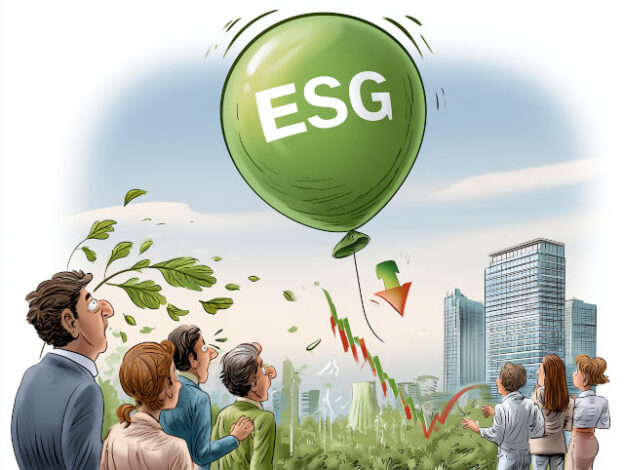
A new study from Murdoch University has found that Environmental, Social and Governance (ESG) downgrades can trigger significantly larger share price losses when they come as a surprise to optimistic investors. The findings suggest that investor expectations play an important role in determining how strongly financial markets respond when a company’s ESG performance deteriorates.
ESG investing has grown significantly worldwide, with investors increasingly considering companies’ sustainability performance when deciding where to allocate capital. ESG scores have consequently become an important tool for assessing corporate performance and potential risks. While previous research has linked declines in ESG ratings with falling share prices, the new study shows that the size of the market reaction can vary considerably depending on how investors viewed the company before the downgrade.
“However, this market reaction is not uniform,” said lead author Dr Phu Ngoc Tran, Lecturer at the Murdoch Business School. “We wanted to investigate whether investor sentiment towards a firm influenced how the market reacted to ESG rating changes.”
The research team analysed ESG rating changes among S&P 500 companies between 2010 and 2024, examining more than 6,700 ESG rating events and their effects on share prices. To determine how investors viewed individual companies, the researchers measured investor sentiment using company-specific news and social media data. They classified sentiment into five categories: positive, negative, risk, volatility, and management-related sentiment.
The study found that investors reacted more strongly to ESG downgrades when they had previously been optimistic about a company’s prospects. Positive sentiment was particularly influential in determining the severity of the market response. “What surprised us was that positive sentiment had a much greater influence than other forms of investor sentiment, such as fear, risk, or concerns about a firm’s management,” said co-author Dr Ariful Hoque of the Murdoch Business School. “Investors appear to punish ESG downgrades most severely when they contradict an otherwise positive view of the firm.”
The effect was particularly strong among larger companies and firms with established records of strong ESG performance. According to Dr Hoque, these companies may face greater consequences because their reputations create higher expectations among investors. “Large companies and those with strong ESG reputations appear to have the most to lose from an ESG downgrade, as these firms attract greater investor attention and higher expectations,” he said.
The findings have important implications for companies seeking to build and maintain strong sustainability reputations. Dr Tran said companies need to protect not only their ESG performance but also the investor confidence associated with their sustainability credentials. Companies with strong ESG reputations should not assume that their past performance protects them from market risk. Instead, the study suggests that a deterioration in ESG performance could produce an even stronger backlash when investors have come to expect consistently high standards.
For investors, the researchers say ESG rating changes should be considered alongside the broader sentiment surrounding a company. Investor expectations can significantly shape how markets interpret new ESG information, meaning an identical downgrade may produce very different consequences for different firms. “Our findings show that the same ESG downgrade can have very different market impacts depending on investor expectations at the time,” Dr Tran said.
More information: Ngoc Phu Tran et al, Which investor sentiment drives the ESG–return link? A multi-dimensional sentiment perspective on ESG changes, International Review of Economics & Finance. DOI: 10.1016/j.iref.2026.105530
Journal information: International Review of Economics & Finance Provided by Murdoch University