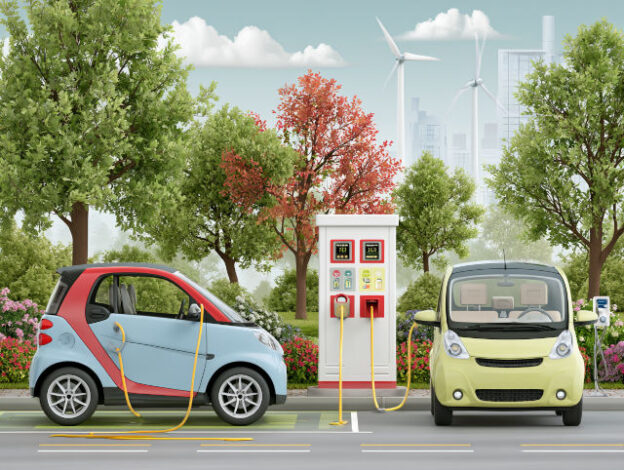
Rising gasoline prices may play an important role in shaping how drivers use plug-in hybrid vehicles. A recent study published in the Journal of the Association of Environmental and Resource Economists examined the relationship between fuel costs and hybrid vehicle behaviour, finding that drivers are more likely to rely on electric charging when gasoline prices increase. The study, titled “Fueling Electrification: The Impact of Gas Prices on Hybrid Car Usage,” was conducted by Laura Grigolon, Eunseong Park, and Kevin Remmy. Their findings highlight how fuel price fluctuations can influence not only vehicle purchasing decisions but also the day-to-day environmental performance of hybrid cars.
The authors note that plug-in hybrid vehicles have become increasingly popular in many countries as governments and consumers seek ways to reduce greenhouse gas emissions and address climate change. Public policies in several regions have encouraged this transition through financial incentives such as purchase rebates, tax credits, and subsidies designed to make hybrid and electric vehicles more affordable. These measures have helped accelerate adoption rates and support broader climate goals. However, while governments often provide incentives for purchasing hybrid vehicles, fewer policies focus on how these vehicles are actually used after they are bought. As a result, many drivers may not fully utilise the electric capabilities of their vehicles.
To better understand hybrid driving behaviour, the researchers analysed detailed micro-level data collected from Spritmonitor, a German application that allows drivers to record fuel consumption, mileage, and charging habits. Their analysis revealed that, on average, only about 32% of the total driving distance in plug-in hybrid vehicles was completed using electric power. Although electricity is frequently less expensive than gasoline, many drivers still depend heavily on the gasoline-powered internal combustion engine. The researchers suggest that this pattern may be explained by what they describe as a “hassle cost” associated with charging. Factors such as locating charging stations, waiting for batteries to recharge, or remembering to plug in the vehicle may discourage drivers from consistently using electric mode.
The study found that changes in fuel prices can significantly alter this behaviour. When gasoline prices rise, drivers appear more willing to overcome the inconvenience associated with charging and make greater use of electric power. According to the authors, a 10% increase in fuel prices was associated with an increase of roughly 1.5 percentage points in electric-mode driving. While this change may appear modest, it represents an important behavioural response that can have broader environmental implications when applied across large numbers of vehicles. The findings suggest that fuel prices can indirectly encourage cleaner transportation practices by motivating drivers to reduce gasoline consumption and rely more heavily on electricity.
These results are particularly important because plug-in hybrid vehicles are often promoted as environmentally friendly alternatives to traditional gasoline-powered cars. However, the environmental benefits of hybrids depend heavily on how they are used in practice. If drivers rarely charge their vehicles and primarily rely on gasoline engines, the expected reductions in emissions may not fully materialise. The authors therefore argue that policymakers and researchers should pay closer attention not only to vehicle adoption rates, but also to actual usage patterns. Understanding how economic factors such as fuel prices influence charging behaviour may help governments design more effective transportation and environmental policies as societies continue working to reduce emissions and transition toward cleaner energy systems.
More information: Laura Grigolon et al, Fueling Electrification: The Impact of Gas Prices on Hybrid Car Usage, Journal of the Association of Environmental and Resource Economists. DOI: 10.1086/739663
Journal information: Journal of the Association of Environmental and Resource Economists Provided by University of Chicago Press Journals