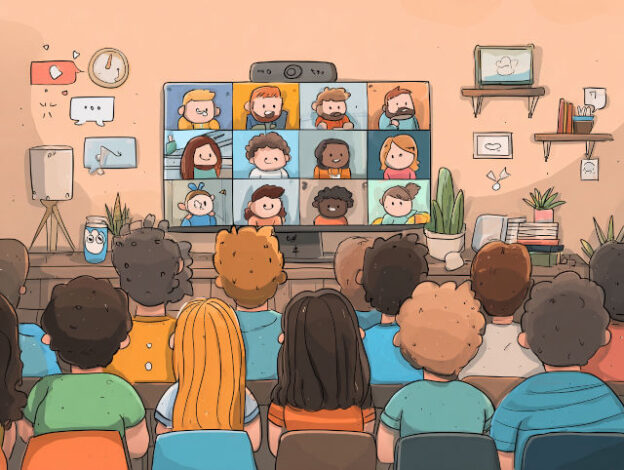
At a time when most TikTok content is filmed in advance, an interesting question emerges: could a band launching a new single build a stronger connection with fans by going live instead? Similarly, might businesses achieve greater impact by unveiling products through livestreams rather than pre-recorded videos? New research from the McCombs School of Business at the University of Texas at Austin suggests that both musicians and brands may indeed benefit from choosing real-time formats.
The rise of livestreaming has been striking, particularly since the pandemic accelerated digital engagement. The global livestreaming market is projected to grow substantially, expanding from approximately $100 billion in 2024 to an estimated $345 billion by 2030. At the same time, nearly one in three internet users now watches livestreams at least weekly on social media platforms, indicating that real-time content has become an increasingly embedded part of everyday online behaviour.
Adrian Ward, an associate professor of marketing, became interested in this phenomenon through his own experience. While watching a livestreamed town hall meeting, he found himself unusually absorbed, feeling almost as though he were physically present. Reflecting on the experience, he realised that the immediacy of the broadcast—rather than just the speaker’s message—played a crucial role in capturing his attention. This observation prompted a broader question about how digital environments might foster deeper feelings of connection.
Working with Alixandra Barasch from the University of Colorado Boulder and Nofar Duani from the University of Southern California, Ward explored what they describe as the “mere liveness effect”. This concept suggests that simply knowing content is unfolding in real time can heighten a viewer’s sense of connection to what they are watching. To examine this idea, the researchers conducted five experiments involving approximately 3,500 participants, comparing responses to livestreamed and pre-recorded content under different conditions.
Across these experiments, participants engaged with a range of viewing scenarios. Some selected either live or recorded videos on Twitch, while others watched a performance by the R&B cover band Sunny and the Black Pack, either as a live YouTube broadcast or as a recording viewed the following day. In another setup, the researchers created a controlled streaming environment in which identical videos were presented as either live or pre-recorded, allowing them to isolate the psychological effects of perceived liveness.
The findings consistently pointed to meaningful differences in audience experience. Viewers reported feeling more connected to performers when watching live content, with one experiment showing a seven-percentage-point increase in perceived connection. Enjoyment also rose modestly, with live viewers expressing slightly higher levels of satisfaction. Perhaps most notably, engagement increased: participants were more likely to continue watching, as well as to follow or subscribe to creators presenting content in real time. These effects were linked to a stronger sense of presence, with viewers feeling mentally transported into the event as it unfolded.
However, the researchers also identified factors that could diminish this effect. For instance, when performers’ faces were not visible—such as when only a musician’s hands were shown—viewers reported weaker feelings of connection despite the content being live. This suggests that visual cues of human presence remain important in reinforcing the psychological impact of livestreaming.
Overall, the research highlights important implications for marketers, content creators, and platform designers. As more people turn to digital spaces to fulfil social and emotional needs, livestreaming offers a way to foster immediacy and shared experience. Ward’s ongoing work aims to explore whether this heightened sense of connection can translate into stronger brand trust or increased sales. Ultimately, the appeal of livestreaming appears to lie in its ability to create moments that feel shared and authentic, allowing audiences to engage with others in a way that feels more immediate and real.
More information: Nofar Duani et al, The Liveness Lift: Viewing Live Streams Creates Connection and Enhances Engagement in Amateur Music Performances, Journal of Marketing. DOI: 10.1177/00222429261421488
Journal information: Journal of Marketing Provided by University of Texas at Austin