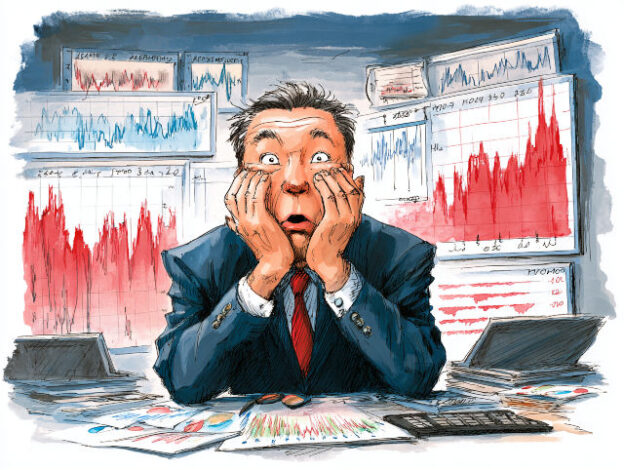
Transparency has become a fashionable mantra in modern finance. Opening up the inner workings of markets is widely assumed to improve decision-making, protect investors, and help regulators spot problems before they spiral out of control. From this perspective, more information appears synonymous with healthier markets, greater accountability, and reduced risk. As a result, transparency is often treated as an unquestioned virtue rather than a policy choice with trade-offs.
Recent academic research, however, suggests that this faith in transparency may be misplaced. Michael Sockin, a finance scholar, argues that making too much information publicly available can actually weaken financial outcomes. By modelling the interaction between corporate bond markets and short-term lending markets, he finds that reduced transparency can sometimes produce better results for the economy as a whole. When detailed information is freely available, companies may be incentivised to take on riskier projects, increasing the likelihood of widespread instability.
Sockin cautions that additional data does not automatically lead to wiser behaviour. In some cases, excessive transparency encourages looser credit conditions, allowing firms to borrow more easily even when their underlying risk is rising. This can result in more corporate defaults and heavier losses for investors. Those losses often spill over into institutions such as pension funds and insurance companies, where financial stress can have serious long-term consequences for households and retirees.
At the centre of this analysis are repurchase agreement markets, commonly known as repo markets. These markets function much like financial pawnshops, allowing large institutional investors to raise short-term cash by temporarily selling securities to lenders, with an agreement to buy them back later at a slightly higher price. Although they operate largely out of public view, repo markets are essential to the smooth functioning of the financial system and support trillions of dollars in daily lending.
Over the past two decades, regulators have sought to increase transparency in both bond and repo markets through detailed reporting systems. These reforms were intended to reduce uncertainty and promote confidence. Sockin’s models suggest that while such measures can expand participation and boost lending, they also reduce discipline. With detailed information readily available, lenders may underestimate risk, while borrowers become less cautious, leading to an overall decline in investment quality.
This framework also helps explain the dynamics of the 2008 global financial crisis. Years of expanding transparency and easy credit encouraged greater risk-taking, leaving the system vulnerable when asset values collapsed. When confidence evaporated, lenders abruptly withdrew, markets froze, and companies struggled to refinance their debts. Sockin’s conclusion is not that transparency is harmful in itself, but that it has limits. A moderate approach — providing general price information without revealing every transaction detail — may preserve discipline and reduce the likelihood of future crises.
More information: Michael Sockin, Informational frictions in funding and credit markets, Journal of Economic Theory. DOI: 10.1016/j.jet.2025.106101
Journal information: Journal of Economic Theory Provided by University of Texas at Austin