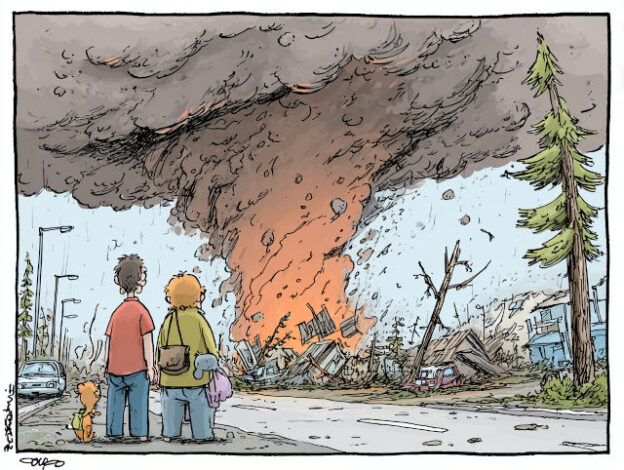
Experiencing a natural disaster during childhood can have a lasting influence on how business leaders think about employee wellbeing decades later, according to a new Concordia-led study. The research suggests that early exposure to extreme events such as earthquakes, floods or hurricanes can shape executives’ attitudes towards risk, responsibility and long-term decision-making, with measurable consequences inside the firms they go on to lead.
The study shows that companies run by chief executives who lived through major natural disasters early in life tend to place greater emphasis on workplace safety. Using mandatory disclosure data submitted to the U.S. Occupational Safety and Health Administration, the researchers found that these firms report significantly fewer work-related injuries and illnesses than comparable companies led by CEOs without such experiences. The pattern holds across a range of sectors and firm sizes, indicating that the effect is not confined to a particular industry or corporate context.
Notably, the differences become even more pronounced in organisations where chief executives wield greater authority, as well as in industries characterised by weaker union presence and stronger pressure to deliver high earnings. In these environments, CEOs typically face fewer internal constraints and more intense financial expectations, making their personal values and priorities especially influential in shaping company policies, including those related to employee safety.
“We often hear in media coverage and public commentary that CEOs are highly self-centred and indifferent to the welfare of their employees,” says the study’s co-author Michel Magnan, Distinguished University Research Professor in the Department of Accountancy at the John Molson School of Business. While he acknowledges that this characterisation may apply in some cases, he notes that the findings tell a more nuanced story. The research suggests that many senior executives view labour safety as a serious and strategic concern, particularly when shaped by formative personal experiences.
Workplace safety remains a critical issue with far-reaching social and economic consequences. According to figures from OSHA and the U.S. National Safety Council, more than 2.6 million workplace injuries were reported in 2023 alone, resulting in an estimated cost of $176 billion and the loss of 103 million workdays. These numbers highlight the scale of the problem and underscore why understanding the drivers of safer corporate practices is of interest not only to employers and workers, but also to regulators and policymakers.
To reach their conclusions, the researchers assembled and analysed an extensive dataset covering more than 500 CEOs. They began by identifying large U.S. firms listed on the S&P 1500 between 2002 and 2011, then gathered detailed biographical information on each chief executive, including birthplace and locations lived in during their formative years. This information was matched with county-level records of natural disasters to determine which CEOs had been exposed to such events in childhood. When combined with OSHA injury data, the analysis revealed that firms led by these executives recorded nearly 24 per cent fewer work-related injuries, even after accounting for factors such as firm size, industry, union strength, financial pressure and CEO demographics. While Magnan cautions that early disaster exposure does not automatically make someone a better leader, the findings shed light on how past experiences can influence executive behaviour — insights that may prove valuable for boards, investors and policymakers seeking to improve worker safety, particularly in high-risk sectors.
More information: Michel Magnan et al, Shaped by the Storm: How Do CEOs’ Early-Life Natural Disaster Experiences Influence Workplace Safety? European Financial Management. DOI: 10.1111/eufm.70036
Journal information: European Financial Management Provided by Concordia University