Tag Archives: solar energy

Better Solar Deployment Is Essential for Widespread Affordable Power

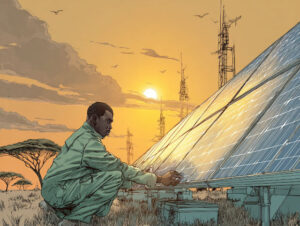
Small household solar systems are increasingly promoted—and financed—as a way to deliver affordable, sustainable energy to people living without electricity. Their rapid spread has fuelled optimism that decentralised solar can close long-standing energy access gaps, particularly in rural Africa. Yet new research suggests that access alone is not enough. Simply owning a solar device does not automatically translate into meaningful or lasting energy services for households that need them most.

A two-year study examining more than 1,000 households in Malawi, one of the countries with the lowest electricity access rates globally, shows why. Researchers found that adoption and long-term use of household solar systems are shaped by factors such as cost, system size and perceived value. While interest in solar is strong, many families struggle to move beyond basic use because their systems deliver very limited power. The findings were published across three peer-reviewed studies and highlight both the promise and the shortcomings of current deployment models.

One of the clearest challenges is capacity. The study found that the median output of household solar systems in Malawi was just 6 watts—enough for minimal lighting or phone charging, but little more. By contrast, typical rooftop solar panels in wealthier countries produce hundreds of watts. The concern, researchers argue, is that rapid uptake of very small systems can create the impression that the energy access problem is being solved, when in reality households are receiving only modest services that do little to transform daily life.

The research shows that households with systems of at least 50 watts experience far greater benefits. These families are more likely to power multiple lights, run small appliances and extend productive activities into the evening. They are also more inclined to invest in additional components to expand their systems over time. However, such higher-capacity systems remain rare and are typically found among better-off households, raising questions about equity and affordability in current solar markets.

At the same time, the studies reveal important benefits even from low-power systems that are often overlooked. Many households prioritise outdoor lighting to improve safety at night, while the most widespread use of solar power is charging mobile phones. In Malawi, where phone ownership is common but grid electricity is scarce, home charging saves households both time and money. Phones also enable access to information, markets and mobile banking services, linking solar adoption to broader social and economic participation.

The research also uncovered subtler effects, including increased use of mobile money among households with solar access, suggesting gains in financial inclusion that are not always captured in traditional evaluations. Despite these positives, researchers stress that household solar in low-income settings is still at an early stage. To deliver widespread, meaningful energy access, future efforts must focus on better deployment—supporting higher-capacity systems, lowering costs and recognising the full range of benefits that solar power can provide as demand and aspirations grow.

More information: Pamela Jagger et al, Shining light on the scale, use, and impact of household solar for achieving energy access in rural Malawi, Energy Research & Social Science. DOI: 10.1016/j.erss.2026.104616

Journal information: Energy Research & Social Science Provided by University of Michigan