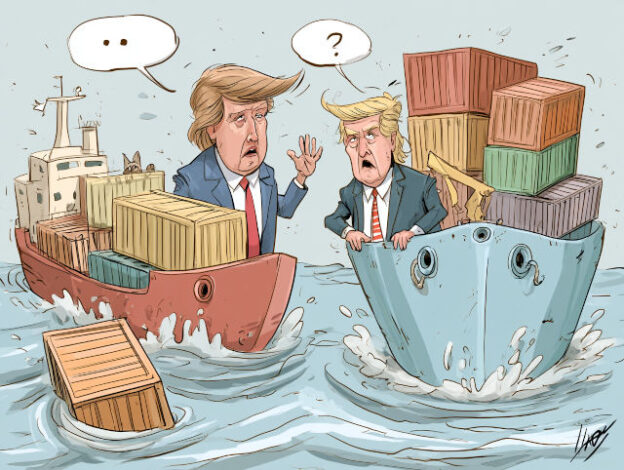
How do political beliefs shape business decisions? While supply chain management is often viewed as a discipline driven by data, costs, and operational efficiency, new research suggests that political ideology may play a larger role than many organizations realize.
In today’s increasingly complex global trade environment, supply chain professionals regularly confront decisions influenced by tariffs, trade restrictions, economic nationalism, and geopolitical tensions. These issues are no longer confined to the political arena; they directly affect sourcing strategies, supplier selection, inventory management, and long-term business planning. As a result, understanding how political perspectives influence professional judgment has become an important area of study.
A recent study published in the Transportation Journal explores this issue by examining whether political ideology and perceived ideological alignment affect how supply chain professionals evaluate operational decisions involving tariffs. The research was conducted by Scott DuHadway of Portland State University and Craig Carter of Arizona State University, both recognized scholars in the field of supply chain management.
The researchers conducted a controlled experiment involving 216 supply chain professionals. Participants were asked to evaluate a sourcing strategy developed in response to tariff-related conditions. Importantly, all participants received identical operational information and were presented with the same sourcing plan. The study then examined how participants’ political ideologies, as well as their perceptions of the manager presenting the plan, influenced their evaluations.
The results revealed that more than objective business considerations influenced decision-making. Participants’ political beliefs significantly affected how they viewed both the sourcing strategy and the manager responsible for recommending it. Individuals were generally more supportive of the operational plan and expressed greater trust in the manager when they perceived ideological alignment between themselves and the decision-maker.
According to DuHadway, “When evaluating identical sourcing strategies tied to tariffs, we found that participants’ political ideology and their perceptions of a manager’s ideology significantly shaped both trust in leadership and support for the operational plan. Even neutral presentations of politically charged issues were enough to activate bias and influence decision-making.”
The findings suggest that tariffs and similar policy issues carry symbolic political meaning that extends beyond their economic implications. Even when managers present recommendations in a neutral and fact-based manner, employees and stakeholders may interpret those recommendations through a political lens. As a result, the same operational decision can receive very different reactions depending on the political beliefs of those evaluating it.
These insights have important implications for organizations operating in politically sensitive environments. As governments around the world increasingly use tariffs and trade policies to advance economic and strategic objectives, supply chain leaders must navigate not only operational challenges but also the social and political dynamics that influence organizational decision-making.
The study highlights the importance of recognizing potential biases when evaluating business proposals. Leaders may need to devote greater attention to communication strategies, transparency, and trust-building efforts when discussing decisions linked to politically charged topics. By understanding how ideological perceptions can shape reactions to operational recommendations, organizations can foster more constructive discussions and make better-informed decisions.
As political polarization continues to influence public discourse and economic policy, this research serves as a reminder that supply chain decisions do not occur in a vacuum. The intersection of politics and logistics is becoming increasingly important, and successful leaders must be prepared to manage both the technical and human dimensions of decision-making.
More information: Scott DuHadway et al, “And Here’s What I Think About Tariffs…”: What Happens When Politics Enters Supply Chain Decisions? Transportation Journal. DOI: 10.1002/tjo3.70027
Journal information: Transportation Journal Provided by Portland State University