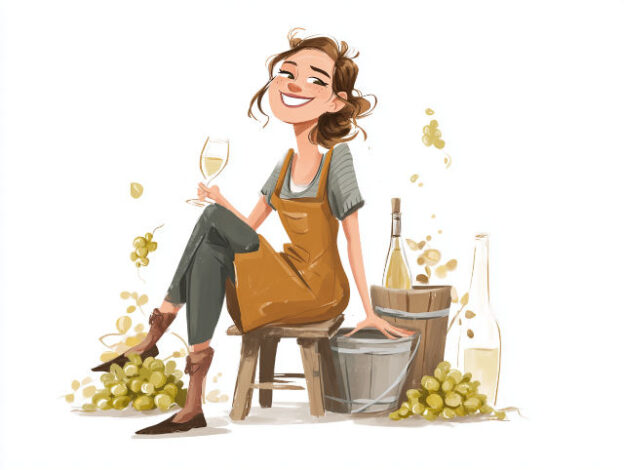
Promoting women’s ownership and leadership in wineries has clear commercial potential, particularly among the largest segment of wine buyers in the United States: women themselves. Research shows that signalling female authorship in winemaking can positively influence purchasing behaviour, suggesting that visibility is not merely a matter of representation but a tangible driver of sales. For an industry long shaped by tradition and male dominance, these findings point to a practical and relatively low-cost way to better align marketing with consumer values.
One of the most striking results is the impact of explicit messaging. Simple phrases such as “proudly made by a woman winemaker” significantly increased women’s intention to purchase a wine, especially when paired with label designs that included traditionally feminine visual cues like floral imagery. These cues did more than attract attention; they also increased perceived value. Women indicated a willingness to pay higher prices for wines that combined female-authorship messages with feminine artwork, demonstrating that gender-linked branding can affect both demand and pricing power.
The results carry particular weight because women account for the majority of wine purchases in the United States, making nearly six out of every ten buying decisions. Wine is widely regarded as a cultural product, where the story behind the bottle contributes meaningfully to brand identity. In that context, the winemaker’s background, values, and personal narrative can shape consumer perceptions just as strongly as grape variety or region. Yet this aspect of identity has often been underutilised by women in the field.
Despite the apparent benefits, women winemakers have historically been less inclined than men to highlight their names or gender on labels. This hesitation is often rooted in concern about bias within a traditionally male-dominated industry, where visibility might invite scepticism rather than support. The research challenges this assumption, suggesting instead that transparency about women’s ownership or leadership can be a strategic advantage rather than a liability, particularly when targeting female consumers.
Building on earlier work about gender cues in wine branding, the study involved more than 1,000 women across the United States and unfolded in three stages. First, participants responded more positively to a fictional red wine when its label featured floral imagery rather than a masculine portrait, and they were willing to pay several dollars more per bottle. In the second stage, adding a “woman-made wine” statement further strengthened purchase intentions, especially when combined with the feminine design. The third stage introduced photographs of women winemakers, which produced a more nuanced effect: purchase interest declined slightly for feminine-label wines, possibly because consumers reacted to the individuals shown rather than the broader message of women’s authorship.
Interestingly, the research also revealed that “woman-made” messaging boosted interest in wines with more traditionally masculine labels. In those cases, women consumers responded positively to both the statement and the inclusion of female winemakers’ images, even indicating a willingness to pay a premium. Beyond immediate marketing insights, the findings also draw attention to the relatively low proportion of women in winemaking roles, estimated at under one-fifth in the United States. By encouraging greater visibility, the research not only offers a route to stronger sales but also highlights women’s often-overlooked contributions to the wine industry.
More information: Demi Shenrui Deng et al, Her wine, her way: How women’s ownership disclosure in wine marketing shapes women consumers’ choices, International Journal of Hospitality Management. DOI: 10.1016/j.ijhm.2026.104596
Journal information: International Journal of Hospitality Management Provided by Washington State University