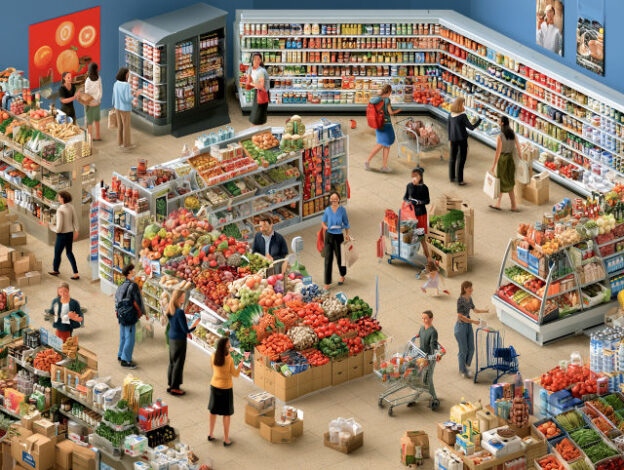
Shoppers who use supermarket trolleys equipped with digital screens spend nearly a third more than those using traditional trolleys, according to new research from Bayes Business School at City St George’s, University of London. The findings suggest that digital technology designed to make supermarket trips easier may also influence how much consumers buy and spend.
AI-powered “smart trolleys”, currently being trialled in major supermarkets, feature tablets attached to their handlebars. The devices allow shoppers to digitalise shopping lists, receive personalised product recommendations, navigate stores and make checkout-free payments. By providing information and prompts throughout a shopping trip, the technology aims to create a more convenient and personalised experience.
Researchers analysed 12,418 unique shopping sessions over one month at a major German supermarket chain, including 9,422 sessions involving smart trolleys. They collected information on basket value, number of items purchased and time spent in store, while also examining differences according to time of day, weekdays and weekends, and the ways shoppers interacted with the technology.
The study found that smart-trolley users spent 32% more on average (€30.18 compared with €22.89) than shoppers who did not use the technology. They also purchased 25% more items, averaging 12.02 products compared with 9.61 among non-users. Differences in spending were particularly noticeable during afternoons and weekends, while smart-trolley users tended to purchase more items during afternoons and evenings.
Smart-trolley users also spent considerably longer in stores. Their shopping trips averaged 40.40 minutes, compared with 32.75 minutes for non-users, representing a 23% increase. The longest trips occurred during the evening. Researchers also found that higher temperatures were associated with shorter shopping trips across all customers, regardless of the type of trolley used.
The researchers separately examined “superusers” who recorded more than 20 interactions with the trolley screen during a shopping session. These highly engaged shoppers bought significantly more items and remained in stores longer, but did not spend more overall. At particularly high levels of screen interaction, both spending and basket size began to decline, suggesting that excessive engagement with the technology may not necessarily translate into greater sales.
Lead author Dr Sabrina Gottschalk, Lecturer in Marketing at Bayes Business School, said the findings demonstrate the potential financial benefits of using technology effectively in retail environments. Digital tools can guide shoppers towards promotions and new products while creating additional opportunities for advertising and customer engagement. However, she cautioned consumers to remain aware of how digital prompts and personalised recommendations may influence their purchasing decisions.
Dr Yusuf Oc, Senior Lecturer in Marketing at Bayes Business School, said the research shows clear increases in spending and purchasing among shoppers who choose digital assistance. The findings suggest supermarkets could encourage adoption through incentives such as loyalty rewards while tailoring promotions to different shopping periods. Overall, the study highlights both the commercial potential of AI-enabled shopping trolleys and the importance of understanding how digital technology can subtly shape consumer behaviour.
More information: Sabrina A. Gottschalk et al, Customer responses to smart shopping carts in supermarkets, Journal of Business Research. DOI: 10.1016/j.jbusres.2026.116337
Journal information: Journal of Business Research Provided by City St George’s, University of London