Monthly Archives: June 2026

A Great Manager Can Be a Team’s Greatest Asset

A new international study published in The Quarterly Journal of Economics suggests that a good manager can be just as important to a company’s performance as the combined productive capacity of its employees. The research also found that those most eager to become managers are not always the best suited for the role.

Previous studies have shown that effective leadership can improve organisational performance by motivating employees, monitoring work, and allocating tasks efficiently. However, measuring a manager’s true impact has been challenging because managers are rarely assigned to teams at random in real-world settings.

To address this issue, researchers developed an innovative method to isolate the manager’s contribution to team performance. In an international laboratory experiment, managers were randomly assigned to multiple teams while researchers controlled for the skill levels of team members.

This approach allowed the researchers to separate leadership ability from both the manager’s own productivity and the abilities of the employees. Teams completed a range of problem-solving tasks under different managers, providing a clearer picture of leadership effectiveness.

The findings revealed that a manager’s overall leadership ability was roughly as important to team performance as the total productive capacity of the employees. The study also found that managerial success was more strongly linked to job-related decision-making skills than to personality traits such as charisma or self-confidence.

A related field study conducted at a large retail chain produced similar results. When manager quality improved from average to good, annual sales increased by 25 per cent, highlighting the significant impact that effective leadership can have on organisational outcomes.

The researchers also found that individuals who expressed the strongest interest in becoming managers did not necessarily perform best in the role. In addition, women were less likely than men to seek managerial positions, despite performing equally well when randomly assigned to them. The findings support the use of more structured, competency-based approaches to selecting and promoting managers.

More information: Ben Weidmann et al, How Do You Identify a Good Manager? The Quarterly Journal of Economics. DOI: 10.1093/qje/qjag004

Journal information: The Quarterly Journal of Economics Provided by University of Gothenburg

New Study Reveals Political and Global Drivers Behind EV Transition in Brazil and Mexico

The transition to electric vehicles (EVs) in Brazil and Mexico has been shaped as much by domestic politics and global economic pressures as by environmental concerns, according to a new study by Renato H. de Gaspi of Johns Hopkins University and Pedro Perfeito da Silva of the University of Exeter. The researchers argue that decisions in both countries have been influenced by factors extending beyond emissions reduction, costs, and technological efficiency.

Although Brazil and Mexico face similar global pressures and structural constraints, they have followed markedly different paths toward transportation decarbonization. The study finds that national political coalitions, industrial structures, and relationships with foreign investors have played a central role in determining each country’s technological strategy.

In Brazil, EV development has been supported by a large domestic market, a strong bioethanol industry, and political alliances linking rural and urban interests. Growth in commodity exports has strengthened the position of domestically owned sectors, while robust consumer demand has attracted foreign investment and provided manufacturers with a substantial internal market.

These conditions have given the Brazilian government greater bargaining power with multinational automakers, which dominate vehicle production throughout the region. As a result, Brazil has favoured decarbonization strategies that align with domestic priorities, particularly hybrid vehicles compatible with the country’s extensive ethanol infrastructure and existing flex-fuel fleet.

Mexico’s experience has been different. Its automotive industry is heavily export-oriented, with about 87 per cent of light vehicle production destined for foreign markets. This dependence on external markets and foreign technology has limited policymakers’ ability to shape industrial development and has tied the country’s EV strategy closely to integration with North American supply chains.

According to Dr Perfeito da Silva, Mexico has rapidly expanded battery electric vehicle assembly and battery production while seeking to increase local content and reduce technological dependence. However, these efforts remain constrained by the country’s export-led development model and its reliance on access to US and Canadian markets.

The study notes that rising protectionist pressures, including tariff threats and uncertainty surrounding key provisions of the US Inflation Reduction Act, have exposed vulnerabilities in Mexico’s approach. While Brazil has pursued a domestically adapted hybrid-ethanol pathway, Mexico faces growing pressure to take a more active role in industrial policymaking as the external environment becomes less stable and predictable.

More information: Renato H. de Gaspi et al, The Politics of Technological Choice in the EV Transition: Comparing Brazil and Mexico, Politics and Governance. DOI: 10.17645/pag.11240

Journal information: Politics and Governance Provided by University of Exeter

Rapid Shipping Takes a Toll on E-Commerce Warehouse Workers

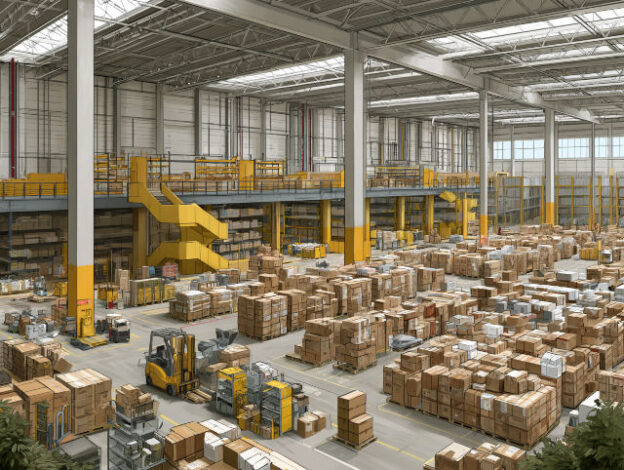
Holding off on a late-night online purchase may do more than save money—it could help reduce pressure on warehouse workers. New research led by Cornell University found that consumers’ demand for inexpensive products delivered quickly contributes to harsher working conditions in e-commerce fulfilment centres compared with traditional warehouses.

The study, published in the ILR Review, provides one of the first comprehensive assessments of warehouse work in the United States. Researchers found that the growing emphasis on convenience, speed, and low prices has significantly reduced job quality for many workers who process online orders.

According to lead author Alexander Kowalski, Assistant Professor of Human Resource Studies at Cornell University, e-commerce intensifies competition among retailers to meet customer expectations, often at the expense of employee well-being. He noted that this trend affects a large and expanding segment of the labour market, but it is not unavoidable.

Researchers surveyed approximately 400 warehouse employees across the United States. Workers in business-to-consumer (B2C) facilities, which primarily fulfil online orders, reported greater pressure to work quickly, fewer opportunities for breaks, higher exposure to unsafe conditions and poorer overall well-being than employees in traditional business-to-business (B2B) warehouses. Despite these challenges, they did not receive higher wages.

To explore differences among employers, the research team surveyed more than 1,400 Amazon warehouse workers and 450 Walmart warehouse workers. The results showed that Amazon employees reported more intense workloads, lower wages, greater unfairness, more safety concerns and higher levels of stress and injury than their Walmart counterparts.

The findings suggest that Amazon’s focus on rapid delivery places greater demands on workers than Walmart’s emphasis on low prices. While job quality was not high in either company, Amazon’s e-commerce fulfilment centres were associated with the least desirable working conditions.

The researchers stressed that poor job quality is not an inevitable consequence of e-commerce. The contrast between Amazon and Walmart demonstrates that different business strategies can produce different outcomes for workers. They argue that improving conditions will require a combination of worker advocacy, public policy, consumer awareness and corporate commitment to balancing efficiency with employee well-being.

More information: Alexander Kowalski et al, At the Mercy of the Market? E-Commerce, Warehouse Work, and Job Quality in the United States, ILR Review. DOI: 10.1177/00197939261444716

Journal information: ILR Review Provided by Cornell University

Research Highlights Environmental Consequences of Growth Driven by Multinational Companies

Multinational companies can boost local economies but often come with higher environmental costs than domestic firms, according to new research by Dr. Frederik Noack, associate professor in the Faculty of Land and Food Systems at the University of British Columbia, published in the journal Nature Climate Change. Drawing on data from across Africa, the study found that multinational activity is associated with greater deforestation and biodiversity loss, even as it contributes to economic growth.

The research addresses a long-standing debate about the role of multinational firms in developing economies. While these companies are often credited with bringing investment, employment opportunities and new technologies, critics have argued that they may relocate environmentally harmful activities to countries with weaker environmental regulations. A key challenge has been determining whether multinational firms directly cause environmental degradation or operate in areas where such impacts are already occurring.

To isolate the effect of multinational activity, the researchers tracked firms through their global networks. They examined how changes affecting company headquarters, such as shifts in access to credit, influenced expansion abroad. Because these changes were unrelated to local environmental conditions, they provided a unique opportunity to identify the environmental consequences of increased multinational activity while controlling for other factors.

The findings reveal a clear relationship between multinational expansion and environmental degradation. Using data that linked millions of firms to satellite measurements of forest cover and land use across Africa, the study found that areas experiencing greater multinational activity saw approximately 24 per cent more deforestation and notable declines in forest cover. The researchers also observed a 0.6 per cent reduction in crop diversity, an important indicator of biodiversity and food security. These environmental impacts persisted over time rather than disappearing after initial development.

At the same time, multinational firms generated measurable economic benefits. Each new multinational affiliate was associated with an increase in local GDP of roughly 0.3 per cent, equivalent to about $106 million. However, the environmental costs were substantial. The average forest loss linked to an additional affiliate amounted to approximately 10,200 hectares. When carbon emissions and related damages were considered, the estimated environmental cost reached about $693 million—several times greater than the economic gains.

The study also found that multinational firms have a significantly larger environmental footprint than domestic firms, even after accounting for differences in size and activity. This is partly because multinational companies are more heavily concentrated in sectors such as mining, large-scale agriculture and manufacturing, which have substantial impacts on land use and ecosystems. The findings suggest that environmental regulations play an important role in shaping these outcomes. Stronger regulations were associated with lower environmental impacts, while weaker rules were linked to greater damage. Although the study focused on Africa, the researchers note that the underlying dynamics apply more broadly. The results indicate that attracting investment and protecting the environment are not mutually exclusive goals, but achieving both depends on the design and enforcement of effective environmental policies.

More information: Frederik Noack et al, The environmental impact of multinational firms in Africa, Nature Climate Change. DOI: 10.1038/s41558-026-02637-6

Journal information: Nature Climate Change Provided by University of British Columbia

Can AI Write Finance Papers as Well as Humans? Evidence Suggests Yes

Artificial intelligence (AI) and large language models (LLMs) can mass-produce academic finance papers that are nearly indistinguishable from human-authored research, according to a new study published in the Journal of Economic Literature. Researchers Mihail Velikov of Penn State and Robert Novy-Marx of the University of Rochester developed an automated pipeline capable of generating hundreds of publication-ready finance papers in a matter of hours.

The project originated from a data-mining exercise examining corporate accounting data for signals that could predict stock performance. After identifying more than 30,000 potential signals and comparing them against 200 previously documented anomalies in the finance literature, the researchers narrowed the list to 95 genuinely novel signals.

Velikov created a website that automatically generated template reports describing each anomaly. While the reports resembled academic papers, they lacked theoretical explanations. Recognising the growing capabilities of LLMs, the researchers turned to AI to generate hypotheses and narratives explaining why the anomalies might exist.

Using Anthropic’s Claude Opus model, the researchers instructed the AI to assign descriptive names to the predictors and produce four distinct manuscripts for each signal, each offering a different theoretical explanation. In total, the system generated 380 complete papers, including abstracts, introductions, methods, results, conclusions and citations. The papers and code were subsequently made publicly available.

The study highlights both opportunities and challenges for academic research. As AI dramatically lowers the cost and time required to produce scholarly manuscripts, it could further increase submissions to journals and conferences, placing additional strain on an already burdened peer-review system. Velikov argues that research evaluation and dissemination practices will need to adapt to the growing role of AI-generated scholarship.

The researchers also raise concerns about “HARKing” — hypothesising after results are known. In the AI-generated papers, hypotheses were created only after patterns had already been identified in the data, raising questions about scientific contribution, research integrity and the role of theory in knowledge creation. Although Velikov does not believe AI will replace researchers, he expects it to fundamentally transform how research is conducted, evaluated and communicated across finance and many other academic disciplines.

More information: Robert Novy-Marx et al, Artificial Intelligence–Powered (Finance) Scholarship, Journal of Economic Literature. DOI: 10.1257/jel.20251821

Journal information: Journal of Economic Literature Provided by Penn State

What Retail Purchasing Patterns Reveal About Menstrual Pain and Period Poverty in England

More than one in four women purchasing menstrual products also bought pain relief in the same transaction, according to a new study led by Dr. Victoria Sivill of the University of Bristol and published in the journal PLOS Digital Health. The findings suggest that menstrual pain is a widespread concern and reveal important socioeconomic differences in access to pain relief.

Menstrual pain affects many individuals worldwide and can disrupt everyday activities, including attendance at school and work. Despite its prevalence, population-level data on menstrual pain and access to treatment remain limited.

To address this gap, researchers analysed anonymised loyalty card data from a major UK health and beauty retailer. The dataset included 211 million transactions made by 3.4 million customers across England between 2006 and 2015.

The study found that 26.7% of customers purchasing menstrual products also bought pain relief at the same time. Shoppers were nearly four times more likely to purchase pain relief during a menstrual product purchase than during other shopping trips. Supporting the validity of the approach, the most common interval between repeat menstrual product purchases was 28 days, matching the average menstrual cycle length.

Income-related differences were particularly striking. Customers living in the lowest-income areas were 32% less likely to purchase pain relief alongside menstrual products than those living in the highest-income areas. The researchers suggest that this disparity is more likely to reflect financial barriers to purchasing over-the-counter medications than differences in the prevalence of menstrual pain.

The authors say the findings highlight the need for greater awareness of menstrual pain and policies that address its socioeconomic dimensions. They argue that improving access to menstrual pain relief should be considered an important component of broader public health efforts aimed at reducing health inequities.

More information: Victoria Sivill et al, What can shopping transactional data reveal about relative prevalence of menstrual pain and period poverty in England? PLOS Digital Health. DOI: 10.1371/journal.pdig.0001308

Journal information: PLOS Digital Health Provided by PLOS