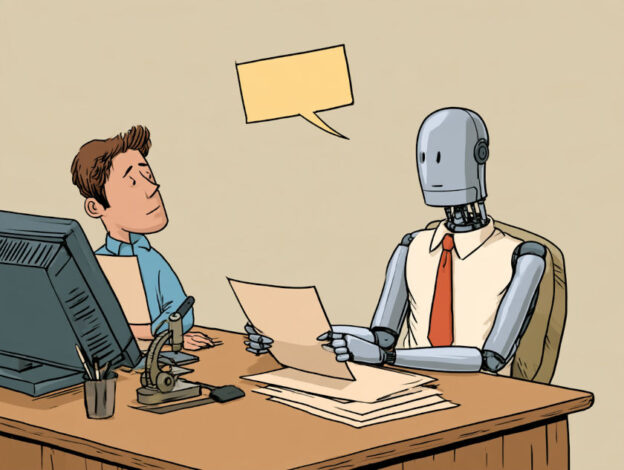
For generations, education has been seen as a pathway to better jobs, higher earnings and economic security. But what happens when machines can perform tasks that once required years of university training? As artificial intelligence reshapes the workplace, the value of human knowledge and qualifications is being questioned, raising fundamental concerns about how societies should prepare people for the future.
In an article published on September 12, 2026, in ECNU Review of Education, researcher Yilei Shao challenges traditional economic thinking about education. With AI providing sophisticated knowledge and problem-solving capabilities on demand, academic credentials may no longer offer the same assurance of professional competence.
The paper revisits educational and economic theories associated with five Nobel Prize-winning scholars, identifying assumptions that have long shaped education systems. These include predictable financial returns from schooling, gradual depreciation of skills, individual ownership of expertise, the credibility of academic qualifications and the broader social benefits of education.
AI, Shao argues, is disrupting these assumptions simultaneously. More years of schooling no longer necessarily guarantee greater economic rewards, while skills can become outdated surprisingly quickly. Expertise is increasingly shared between humans and machines, qualifications may become weaker indicators of ability, and technology companies can capture economic benefits from knowledge contributed by others.
To explain this changing landscape, Shao introduces “Intelligence Surplus”, describing the collective intelligent capabilities available to society beyond its immediate needs. Unlike human capital, which focuses on individual knowledge and skills, Intelligence Surplus encompasses human abilities, AI technologies and the institutions governing their use.
The concept has three dimensions: embodied intelligence, reflecting people’s ability to collaborate with AI; objectified intelligence, represented by technological systems; and institutionalised intelligence, involving the rules, standards and governance structures that guide their responsible use. Together, these resources could strengthen society’s capacity for innovation and adaptation.
Yet the paper suggests that intelligence itself may no longer be the most valuable scarce resource. Instead, the ability to transform human experiences, values and judgement into meaningful contributions within AI systems could become increasingly important. Shao calls those performing this role “First Compressors”, emphasising uniquely human capacities rooted in relationships, empathy, care and interpretation.
This shift calls for education to move beyond simply producing employable graduates. Shao proposes treating education as “intelligent infrastructure” that develops technological and humanistic literacy, encourages lifelong learning, supports human-AI collaboration and establishes institutions capable of managing intelligent technologies responsibly.
Ultimately, the paper raises a question that extends far beyond employment: What should education help people become? Drawing on philosopher Hannah Arendt’s ideas about human activity, Shao argues that education must nurture judgement, responsibility, compassion and the ability to create meaning. In a world where machines can increasingly supply intelligence, humanity’s greatest value may lie not in what we know, but in how we use our uniquely human capacities.
More information: Yilei Shao et al, Intelligence Surplus: Economics of Education After Human Capital, ECNU Review of Education. DOI: 10.1177/20965311261485586