Medicine should never feel out of reach. Yet for many Filipinos, reaching a pharmacy can require travelling long distances at considerable cost. In a remote sitio in Barangay Kalawakan, Bulacan, for example, the nearest pharmacy is almost a dozen kilometres away, with no public transportation. A trip to town can cost more than ₱400, while walking may take more than an hour.
A new study by Ateneo de Manila University researchers explores whether small sari-sari stores could help bridge these gaps by serving as informal points of access to common medicines. Published in the August 2026 issue of Acta Medica Philippina, the qualitative study examines the experiences of sari-sari store owners who sell medicines within their communities.
The researchers interviewed 14 tinderas, or sari-sari store owners. Most sold medicines for common ailments such as headaches, fever, colds, diarrhoea and stomachaches. These included familiar medicines such as paracetamol, mefenamic acid, ibuprofen and loperamide, generally sold in small quantities through the Filipino practice of tingi-tingi, or purchasing only what is immediately needed.
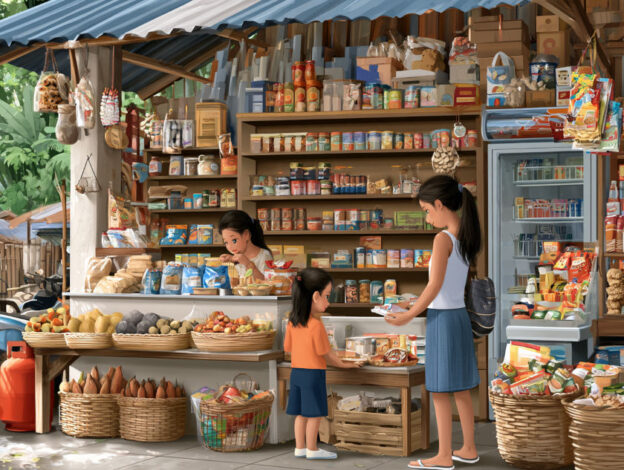
The transaction can appear remarkably ordinary: a neighbour walks to the local sari-sari store, asks for a few tablets and returns home. Yet this everyday exchange reflects larger issues of proximity, affordability and gaps in formal healthcare. The researchers argue that sari-sari stores offer a unique window into the interactions among consumers, government and the medical and pharmaceutical systems.
Distance emerged as an important reason why some tinderas sell medicines. Where pharmacies are far away, stocking basic medicines can save residents both time and transportation costs. Store hours can also make a difference. One tindera reported keeping her store open until midnight, allowing residents to obtain medicines after a nearby pharmacy had closed.
Because tinderas interact with neighbours every day, they become familiar with what people request, what they can afford and what their communities need. Some began stocking medicines after repeatedly seeing local demand. In this sense, sari-sari stores do more than bring products closer to residents; they reveal how informal networks of care develop alongside formal healthcare institutions.
There are important boundaries, however. The tinderas interviewed did not consider themselves doctors or pharmacists, and 11 of the 14 refused to sell antibiotics or other prescription medicines, instead directing customers to healthcare professionals when necessary. There are also legal restrictions: selling pharmaceuticals through sari-sari stores is generally prohibited unless the Philippine Food and Drug Administration appropriately licenses the outlet, although regulatory considerations may differ in geographically isolated and disadvantaged areas.
Rather than advocating for sari-sari stores as replacements for pharmacies, the researchers suggest recognising the role they already play while considering the economic and geographical barriers communities face. These neighbourhood stores occupy an unusual space between households and formal healthcare—shaped by distance, affordability, convenience, trust and necessity. Their role ultimately raises a broader question: what informal systems emerge when essential healthcare remains too distant or costly for the people who need it?
More information: Melissa Louise M. Prieto, et al, Sari-sari Stores as Community Pharmacies? A Qualitative Exploration of Sari-sari Stores Selling Medicines in the Philippines, Acta Medica Philippina. DOI: 10.47895/amp.v60i15.13577
Journal information: Acta Medica Philippina Provided by Ateneo de Manila University