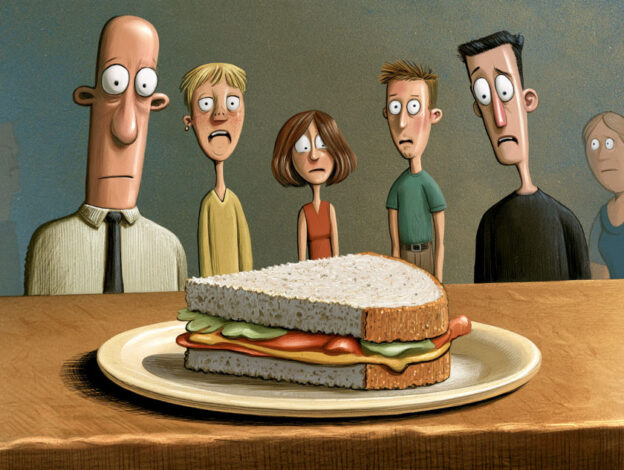
A one-cent difference in menu prices could have a surprising influence on what restaurant customers decide to order. New research suggests that pricing smaller portions just below a whole-dollar amount can make diners feel they are getting a fairer deal, potentially encouraging more people to choose small plates over regular-sized meals.
Researchers found that prices ending in .99 were more appealing to customers considering smaller portions than rounded prices ending in .00. Although the difference was negligible, diners were more likely to view nonrounded prices as reasonable and express an intention to order. The effect, however, did not extend to regular-sized meals.
“Many people think pricing is part of revenue management. So they’re coming only from the cost control and bottom-line perspective. But pricing is a marketing and framing strategy,” said Stephanie Liu, senior author of the study and associate professor of hospitality management at The Ohio State University. The findings were published in the Journal of Hospitality and Tourism Management.
The research grew out of a familiar dining frustration. During pandemic lockdowns, lead author Xi Yu frequently ordered six-inch sandwiches because she could not finish a full-sized one. Yet the smaller sandwiches cost considerably more than half the price of larger versions. Yu, now an associate professor at the City University of Macau, began questioning how restaurants could make smaller portions seem better value.
To investigate, the researchers interviewed 36 consumers and conducted an experiment involving 244 American adults. The interviews revealed widespread concerns that small plates were overpriced relative to their portion sizes. Participants nevertheless appreciated smaller meals for their potential health benefits, reduced food waste and opportunities to enjoy a greater variety of dishes.
In the experiment, participants imagined ordering a soup-and-sandwich lunch combination at a fictional restaurant. They were shown either a small meal priced at $7.99 or $8.00, or a regular-sized meal costing $11.99 or $12.00. They then assessed the fairness of the prices and indicated how likely they would be to order.
The results showed that nonrounded prices increased customers’ willingness to order smaller meals because they conveyed a sense of discount or better value. “The rationale is that the nonrounded price will always signal a sense of a discount,” Yu explained. For regular-sized portions, however, whether prices ended in .99 or .00 made little difference to purchasing intentions.
The findings offer restaurants a straightforward way to make smaller portions more attractive without substantially changing prices. Liu believes understanding consumer psychology is essential to developing pricing strategies that benefit both businesses and diners. Rather than encouraging customers to order larger meals simply because they appear to be better value, restaurants could use subtle pricing adjustments to help people choose portions that suit their appetites. As Liu put it, “We don’t want them to choose the regular plate just to save money.”
More information: Xi Yu et al, Effective price framing strategies for promoting small plates, Journal of Hospitality and Tourism Management. DOI: 10.1016/j.jhtm.2026.101520
Journal information: Journal of Hospitality and Tourism Management Provided by Ohio State University