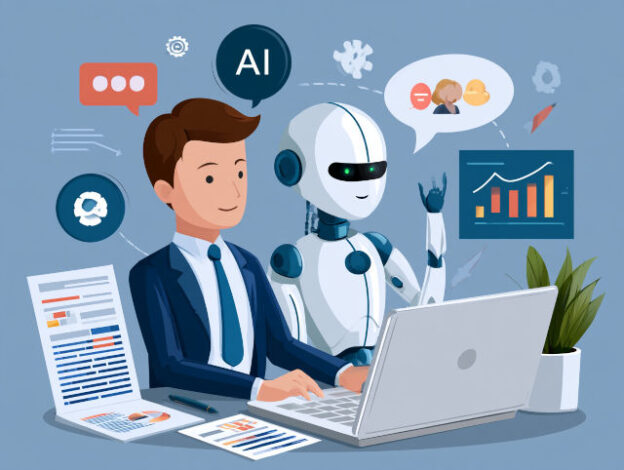
Generative artificial intelligence (Gen-AI) has become a routine part of working life. Still, overreliance on the technology could weaken managers’ ability to develop moral insight, contextual understanding and practical know-how, according to a new study led by the University of Bath.
Published in the Academy of Management Review, the research examines how tools such as ChatGPT may affect “managerial phronesis” – the practical wisdom managers develop through real-world experience, reflection and interaction with others.
“Gen-AI appeals because it can help people complete tasks more quickly. However, Gen-AI cannot replace the lessons learned through first-hand experience,” said Professor Dirk Lindebaum of the University of Bath’s School of Management. Unlike humans, he explained, AI does not experience the world, understand the consequences of decisions or grasp the social and emotional complexities of workplaces. Instead, it generates responses based on patterns in existing data.
The researchers warned that managers who increasingly outsource tasks such as idea generation and problem-solving to Gen-AI may rely less on their own judgement. Over time, this could reduce their ability to learn from experience, think critically and anticipate what actions are needed to achieve future goals.
Researchers from the Universities of Bath, Ohio, Lausanne and Cardiff described this process as “epistemic de-skilling”, in which people gradually lose knowledge-related capabilities by outsourcing too much thinking to Gen-AI. The risk may be particularly high when managers face intense time pressures and turn to AI as a shortcut rather than engaging deeply with problems themselves.
In these circumstances, managers may be less likely to ask important questions, seek different perspectives or learn through real-world interactions. Instead, they could become dependent on AI-generated responses that lack the context and moral judgement required for complex decisions involving employees, customers and organisational challenges.
However, the researchers also identified ways Gen-AI could strengthen managerial judgement through a process they call “epistemic up-skilling”. Rather than accepting AI-generated answers at face value, managers can use them as tools for reflection – challenging assumptions, considering alternative scenarios and testing the reasoning behind their own decisions. Gaps in AI explanations may also encourage managers to think more carefully about their choices and their consequences, although doing so requires persistent effort.
The benefits are most likely when managers are held accountable for their decisions and must explain their reasoning, the study suggested. In such workplaces, Gen-AI could encourage deeper reflection rather than substitute for human judgement. “It is becoming increasingly clear that simply introducing AI tools will not automatically improve decision-making or organisational performance,” Professor Lindebaum said. Organisations therefore need to carefully design roles, responsibilities and workflows so employees continue developing the human skills that AI cannot replicate.
More information: Dirk Lindebaum et al, A Process Model of Managerial Phronesis in the Age of Generative AI, Academy of Management Review. DOI: 10.5465/amr.2024.0582
Journal information: Academy of Management Review Provided by University of Bath