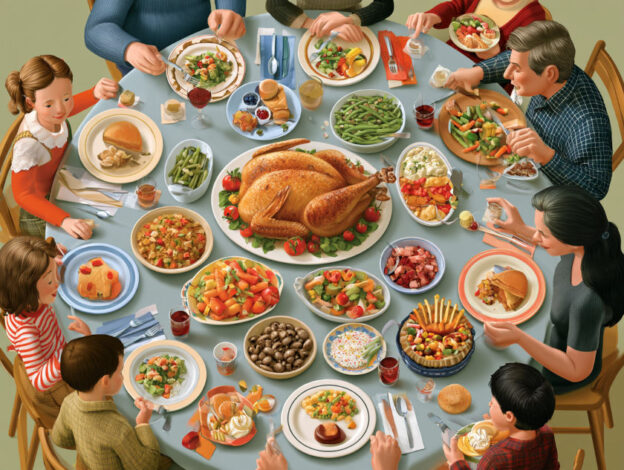
Thanksgiving is a time for gathering around the table, but the abundance of holiday food comes at a considerable cost. A new study estimates that Americans discarded approximately 166,000 metric tonnes of food during Thanksgiving week in 2025, highlighting how excessive meal preparation and overcrowded refrigerators contribute to waste.
Researchers at The Ohio State University found that nearly 75% of Americans who cooked Thanksgiving meals prepared more food than necessary. Meanwhile, one in five households threw away perfectly edible food before the celebrations even began, often to make refrigerator space for turkeys, side dishes and other holiday ingredients.
“That week of Thanksgiving, people bought about $3 billion worth of food that they then eventually discarded. It’s about 40 football fields’ worth of discarded food,” said Brian Roe, professor of agricultural, environmental and development economics at Ohio State. The amount represented roughly 40% more waste than during a typical late-autumn week, he added.
The research, published in the journal Waste, was conducted by Roe and former Ohio State doctoral student Ran Li, now an assistant professor at Penn State University. They surveyed American adults during autumn 2025, collecting responses from 879 participants before and after Thanksgiving and from 506 participants during two December surveys. Their analysis found that the same households discarded 39% more food during Thanksgiving week than during a comparable week in December, when waste totalled approximately 122,400 metric tonnes.
Holiday participation played a significant role. The 11% of respondents who both hosted and attended Thanksgiving meals generated the most waste, averaging 1.8 pounds per person. Those who only attended discarded 1.2 pounds per person, compared with one pound among hosts. Households participating in both activities wasted 140% more food than non-participants. Fresh produce was the most frequently discarded category, followed by grains and starches, meat and fish, dairy products and beverages.
Overpreparation was often intentional, with families wanting leftovers or ensuring guests had plenty to eat. Others struggled to judge quantities. About 25% of respondents admitted preparing too much because they were uncertain how much their guests would consume. Roe identified this group as particularly wasteful, suggesting that better portion estimates could substantially reduce unnecessary cooking.
Some households were already taking practical steps. Around 37% of hosts provided takeaway containers so guests could bring leftovers home. Roe also recommended the “Guest-Imator” calculator available through Save the Food, which helps households estimate appropriate meal quantities based on guest numbers.
But reducing waste may begin days before Thanksgiving dinner. Researchers found that approximately one in five households discarded additional food while clearing refrigerator space for holiday groceries. Roe suggested planning meals around existing refrigerated ingredients before shopping for Thanksgiving supplies. Using what is already available, rather than throwing it away to accommodate a turkey, could prevent waste before the celebrations even begin.
More information: Ran Li et al, Talking Turkey: Residential Food Waste and Thanksgiving, Waste. DOI: 10.3390/waste4040036
Journal information: Waste Provided by Ohio State University